Wardrobe Planning Guide: Depth, Storage and Internal Accessories
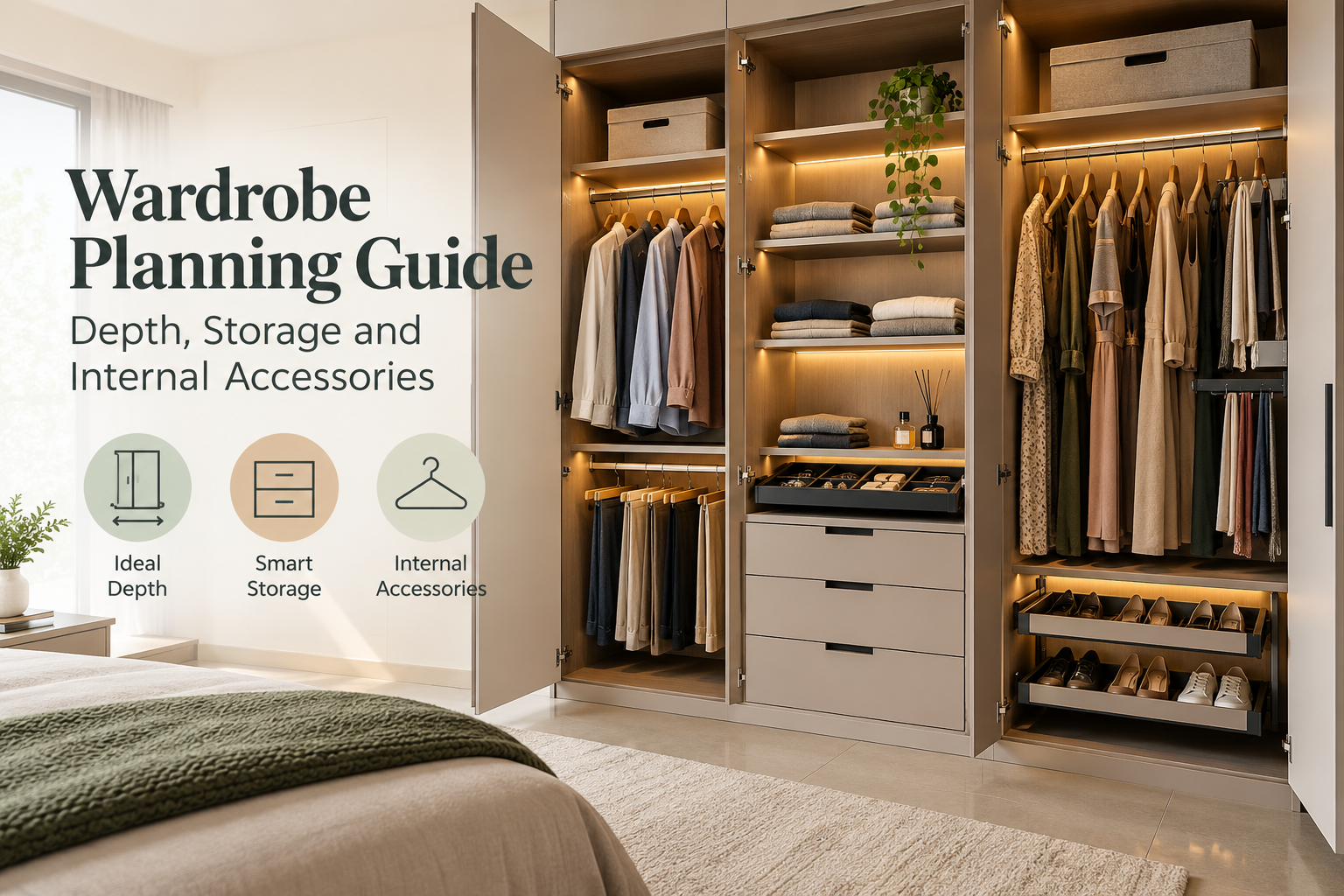
A well-designed wardrobe is more than just a place to store clothes. It plays an important role in keeping your bedroom organised, clutter-free and visually appealing. Whether you're designing a wardrobe for a new home or upgrading your existing storage, proper planning makes all the difference.
From choosing the right wardrobe depth to selecting smart internal accessories, every detail contributes to better functionality and convenience.
In this guide, we'll explore everything you need to know about wardrobe planning, storage optimisation and modern wardrobe accessories to create a space that works perfectly for your lifestyle.
1. Understanding the Ideal Wardrobe Depth
Wardrobe depth is one of the most important factors to consider during the planning stage. An incorrect depth can make hanging clothes difficult, waste valuable space or affect your bedroom's movement area.
Standard Wardrobe Depth
For most Indian homes, the recommended wardrobe dimensions are:
- Hinged Door Wardrobe: Approximately 600 mm (24 inches) overall depth.
- Sliding Door Wardrobe: Approximately 650–700 mm overall depth, depending on the sliding track mechanism.
- Wardrobe Height: Typically 7–8 feet, with additional loft storage where required.
- Wardrobe Width: Customised according to the available wall space and storage requirements.
These are general planning dimensions. The final measurements should account for internal usable space, shutter thickness, hardware and wall conditions.
Pro Tip: Always consider the wardrobe's usable internal depth rather than just its external dimensions. This ensures your clothes hang comfortably without touching the shutters.
2. Planning Your Wardrobe's Internal Storage
A beautiful wardrobe is only truly functional when its internal compartments are designed around your everyday needs.
Instead of dividing the wardrobe into equal sections, consider how much space you actually need for hanging clothes, folded garments and accessories.
Hanging Sections
Hanging sections are ideal for shirts, dresses, sarees, formal wear and jackets.
- Short Hanging Space: Approximately 900–1,100 mm of clear height for shirts, blouses and jackets.
- Long Hanging Space: Approximately 1,400–1,700 mm for dresses, long kurtas and other lengthy garments.
- Double Hanging Rods: Useful for maximising vertical storage when most of your clothes are short garments.
By combining short and long hanging sections, you can significantly improve storage efficiency.
Shelves for Folded Clothes
Shelves are essential for organising T-shirts, jeans, sweaters, towels and everyday clothing.
A clear vertical spacing of approximately 250–350 mm works well for most folded garments.
Adjustable shelves offer greater flexibility, allowing you to change the layout as your storage requirements evolve.
Dedicated Drawer Storage
Drawers are perfect for smaller belongings that can easily become disorganised.
Consider including:
- Shallow drawers for watches, jewellery and accessories.
- Medium drawers for innerwear, socks and daily essentials.
- Deeper drawers for folded clothing and personal belongings.
Soft-close drawer channels add convenience while reducing noise and impact during everyday use.
3. Essential Internal Wardrobe Accessories
Modern modular wardrobes can be equipped with intelligent accessories that make storage more accessible and organised.
Pull-Out Trouser Rack
A pull-out trouser rack keeps trousers neatly arranged, reduces creasing and makes it easier to select outfits without disturbing other clothes.
Saree and Garment Organisers
Dedicated saree racks and pull-out organisers help maintain neatly arranged traditional wear while improving accessibility.
Jewellery and Accessory Trays
Compartmentalised drawers with dividers provide dedicated storage for jewellery, watches, belts, ties and smaller accessories.
Pull-Down Hanging Rod
For taller wardrobes, pull-down hanging rods allow you to access elevated hanging sections without requiring a step stool.
Pull-Out Shoe Rack
Integrated shoe storage helps keep footwear organised without occupying additional bedroom space.
Built-In Wardrobe Lighting
Motion-sensor or shutter-activated LED lighting improves visibility inside wardrobe compartments and adds a premium touch to the design.
Design Tip: Choose accessories based on your daily routine rather than adding every available feature. A well-planned combination delivers better functionality and value.
4. Sliding vs Hinged Wardrobes: Which Is Better?
Both sliding and hinged wardrobes offer unique advantages. The ideal choice depends on your room dimensions, accessibility needs and preferred design.
Sliding Door Wardrobes
Sliding wardrobes are particularly useful in compact bedrooms because their shutters do not swing outward.
Advantages:
- Suitable for bedrooms with limited door-opening space.
- Clean, contemporary appearance.
- Available with mirrored, glass or laminate finishes.
- Great for modern apartment interiors.
However, only part of the wardrobe can be accessed at a time, and the sliding mechanism requires additional depth.
Hinged Door Wardrobes
Hinged wardrobes remain a popular option because of their simplicity and accessibility.
Advantages:
- Wider access to internal storage when doors are opened.
- Easier access to drawers and wardrobe accessories.
- Flexible internal organisation.
- Suitable for traditional and contemporary bedrooms.
The main consideration is providing sufficient clearance for the shutters to open comfortably.
5. Maximising Wardrobe Space in Small Bedrooms
Limited bedroom space doesn't mean you have to compromise on storage.
With thoughtful design, even compact wardrobes can accommodate everyday clothing, accessories and seasonal items.
Choose Floor-to-Ceiling Storage
Extend your wardrobe upwards wherever the room layout permits. Additional upper compartments can store suitcases, blankets and rarely used belongings.
Use Multi-Functional Compartments
Combine hanging rods, drawers and adjustable shelves rather than dedicating the entire wardrobe to one storage type.
Add Internal Mirrors
A mirror integrated into a wardrobe shutter or pull-out panel can eliminate the need for a separate dressing mirror.
Plan Corner Storage Carefully
For bedrooms with L-shaped wardrobes, use accessible corner compartments and avoid deep spaces that are difficult to reach.
Organise by Frequency of Use
Keep regularly used clothes at comfortable heights, occasional items in upper compartments and heavier belongings in lower storage sections.
6. Choosing the Right Materials and Finishes
The materials used in wardrobe construction influence durability, maintenance and overall appearance.
Common wardrobe material and finish options include:
- Plywood: A versatile material available in different grades for varying moisture-resistance requirements.
- Engineered Boards: MDF and other engineered panels can be used in suitable applications depending on the design and environment.
- Laminate Finishes: Available in numerous colours and textures, offering easy-maintenance surfaces.
- Glass and Mirror Shutters: Create a modern aesthetic and can make compact bedrooms appear more spacious.
- Premium Decorative Finishes: Veneers, textured laminates and selected painted finishes enhance the visual appeal of wardrobes.
For homes in Bengaluru, it is particularly important to assess moisture exposure, wall conditions, material quality and edge sealing before finalising construction.
7. Common Wardrobe Planning Mistakes to Avoid
Even an attractive wardrobe can become inconvenient when important functional details are overlooked.
Insufficient Hanging Space: Too many shelves can make storing dresses, shirts and formal clothing difficult.
Incorrect Wardrobe Depth: Shallow hanging sections may cause clothes to press against the shutters.
Poor Drawer Placement: Drawers should be positioned so they can open without colliding with shutters, handles or nearby furniture.
Ignoring Lighting: Dark internal compartments make it harder to locate clothes and accessories.
No Seasonal Storage: Without dedicated upper storage, suitcases and blankets may occupy valuable everyday space.
Overcrowding with Accessories: Unnecessary pull-outs and organisers can increase cost while reducing useful storage capacity.
Planning the internal layout before finalising the external appearance helps prevent these issues.
8. Custom Wardrobes: Designed Around Your Lifestyle
Every homeowner has different storage preferences.
A working professional may require more hanging sections for formal clothing, while a family may prioritise additional drawers, saree storage and children's compartments.
A customised wardrobe allows you to create the right balance between aesthetics, accessibility and functionality.
At Timberlane Interiors, we believe that wardrobe design should reflect the way you live. From modular storage solutions and premium finishes to carefully planned internal accessories, our team helps create wardrobes that complement your home and everyday requirements.
Frequently Asked Questions
1. What is the ideal depth for a bedroom wardrobe?
Approximately 600 mm is a common starting point for hinged wardrobes, while sliding wardrobes often require around 650–700 mm overall depth. Actual dimensions depend on the door mechanism and usable internal space.
2. How can I increase storage in a small wardrobe?
Use double hanging rods, adjustable shelves, internal organisers, drawers and upper loft storage. Customised compartment planning can help make better use of the available space.
3. Which wardrobe accessories are most useful?
Soft-close drawers, trouser racks, jewellery organisers, pull-out shelves and wardrobe lighting are useful additions, depending on your clothing and storage needs.
4. Are sliding wardrobes suitable for small bedrooms?
Yes. Sliding wardrobes can work well in compact bedrooms because they do not require outward door-swing space, provided sufficient depth and access are available.
Final Thoughts
A perfectly planned wardrobe brings together thoughtful dimensions, efficient storage and practical accessories.
Whether you prefer a minimal sliding wardrobe or a spacious customised design, the key is to make every compartment purposeful.
Investing in the right layout today can make your bedroom more organised, comfortable and functional for years to come.
Transform Your Bedroom with Timberlane Interiors
Looking for a customised wardrobe that combines elegant design with smart storage?
Explore thoughtfully designed modular wardrobe solutions with Timberlane Interiors, Bengaluru.
Book Your Free Design Consultation Today!
Website: https://timberlane.co.in/
Call Us: +91 9066686668
Ready to Design a Home That Feels Like You?
Connect with Timberlane today and let us transform your vision into a beautifully designed living experience.
Start Your Journey