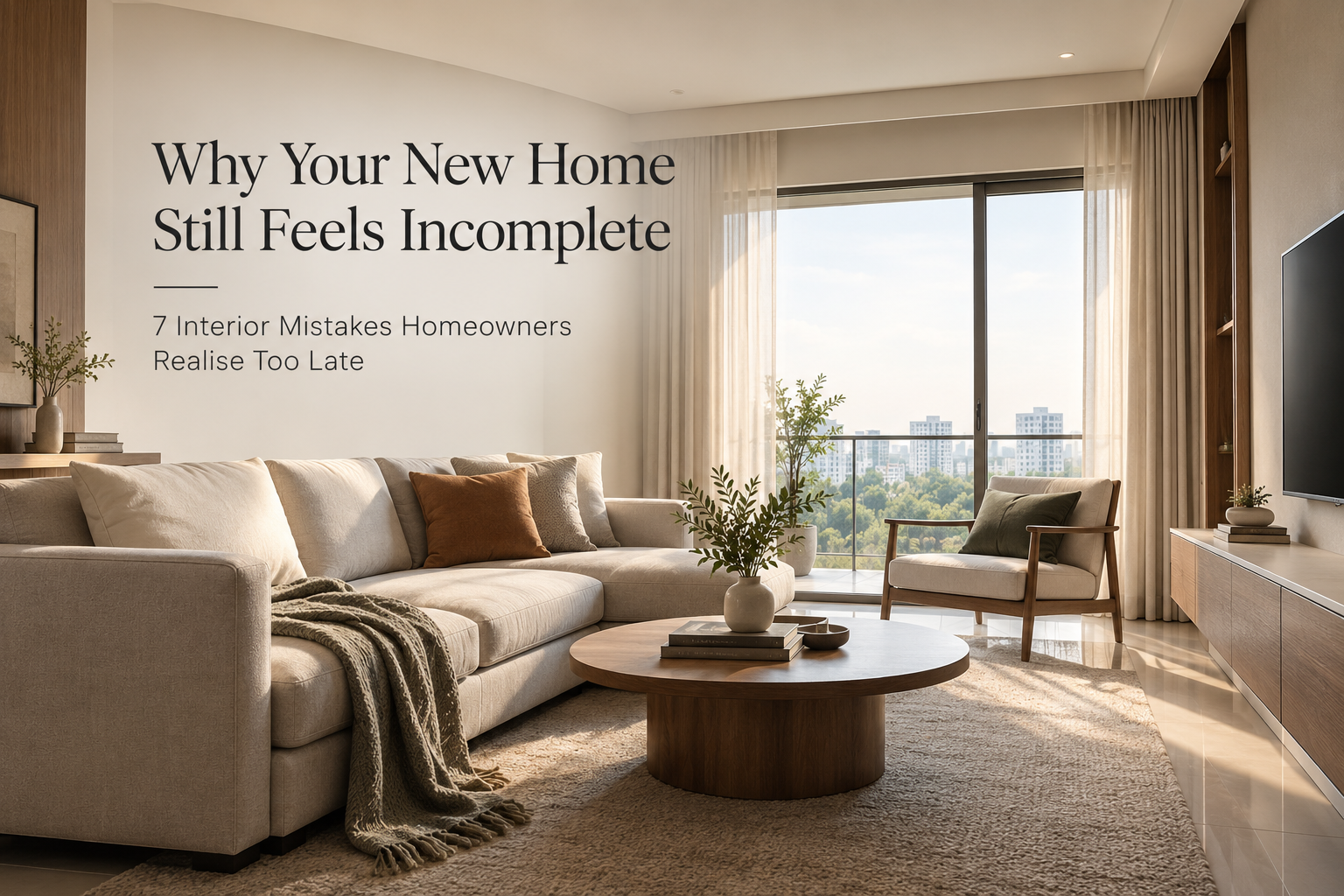
Why Your New Home Still Feels Incomplete 7 Interior Mistakes Homeowners Realise Too Late
You finally got the keys to your new home.
The walls are freshly painted. The floors are new. The rooms look spacious and full of potential.
Yet somehow, something feels… incomplete.
The living room doesn't feel as inviting as you imagined. The kitchen storage seems insufficient. The bedroom feels smaller than it looked on the floor plan. Wires are visible where you didn't expect them. And after adding furniture, the space suddenly feels crowded.
This is more common than you might think.
A beautiful home isn't created simply by filling it with expensive furniture or choosing attractive colours. Good interiors come from making the right decisions before the work begins.
Here are seven mistakes homeowners often realise only after moving in.
1. Designing Each Room Separately
One of the biggest mistakes is treating every room as an independent project.
You might choose one colour palette for the living room, another style for the bedroom and something completely different for the kitchen.
Individually, each room may look good.
Together, however, the home can feel disconnected.
The better approach
Think of your home as one complete visual story.
The colours, materials, finishes and overall design language should complement one another while still allowing every room to have its own personality.
For example, a warm wood finish used in the living room can subtly continue into the bedroom or kitchen, creating a sense of continuity throughout the home.
2. Underestimating Storage
Storage is rarely a problem on day one.
You move in with a few boxes, organise everything and feel like you have plenty of space.
Then life happens.
Clothes increase. Kitchen appliances arrive. Shoes accumulate. Children's belongings need space. Documents, luggage and everyday items need somewhere to go.
Suddenly, the beautifully designed home starts looking cluttered.
The better approach
Plan storage around your actual lifestyle, not just the room dimensions.
Think about:
- Daily-use items
- Seasonal clothing
- Kitchen appliances
- Cleaning supplies
- Shoes and accessories
- Luggage
- Books and documents
- Items you don't use every day
Smart storage isn't about building more cabinets everywhere.
It's about creating the right storage in the right places.
3. Choosing Looks Over Function
That stunning Pinterest kitchen may look perfect.
But will it work for you?
A beautiful wardrobe with insufficient storage isn't useful. A stylish kitchen without enough countertop space becomes frustrating. A gorgeous living room with poor movement space can feel uncomfortable.
Interior design should look good, but it should also make everyday life easier.
The better approach
Before finalising a design, ask yourself:
“How will I actually use this space every day?”
Where will you keep the things you use frequently?
Where will you stand while preparing food?
Can two people comfortably move around the kitchen?
Will the wardrobe provide enough hanging and folding space?
Can you clean the area easily?
The best interiors don't just photograph well.
They work well.
4. Ignoring Lighting During the Design Stage
Lighting is often treated as the final step.
That's a mistake.
Poor lighting can make an otherwise beautiful interior feel dull, harsh or uncomfortable.
A room may have expensive finishes and elegant furniture, but if the lighting isn't planned properly, the design can lose its impact.
The better approach
Think about lighting while planning the interiors.
Different areas need different types of lighting.
For example:
Living room:
A combination of ambient and accent lighting can create a comfortable atmosphere.
Kitchen:
Work areas need practical lighting so countertops aren't left in shadows.
Bedroom:
Soft, comfortable lighting works better than overly bright illumination.
Wardrobe:
Proper internal lighting can make everyday use much easier.
Lighting shouldn't simply illuminate a room.
It should enhance how the room is experienced.
5. Choosing Colours Without Considering the Entire Space
A colour may look beautiful in a showroom and completely different inside your home.
Why?
Because colour depends on lighting, room size, flooring, furniture, natural light and surrounding materials.
A dark shade in a large, naturally lit room may look sophisticated.
The same shade in a smaller room could make the space feel heavier.
The better approach
Don't choose colours in isolation.
Look at the combination of:
Wall + flooring + furniture + lighting + finishes
together.
Neutral shades can create a timeless foundation, while carefully selected accent colours can add personality without overwhelming the space.
The goal isn't to follow every colour trend.
It's to create a home you won't get tired of looking at after a few years.
6. Planning Electrical Points Too Late
This is one of those mistakes you notice only after the interiors are finished.
You finally place your television and realise the socket isn't where you need it.
You install a bedside table and discover there is no convenient charging point.
You add a kitchen appliance and realise the electrical layout doesn't accommodate it properly.
These small inconveniences can become permanent frustrations.
The better approach
Plan electrical requirements alongside the furniture and storage layout.
Think about:
- TV placement
- Bedside charging
- Kitchen appliances
- Work-from-home setups
- Wi-Fi routers
- Decorative lighting
- Washing machines
- Refrigerators
- Entertainment systems
Your electrical plan should follow your lifestyle and furniture layoutnot the other way around.
7. Trying to Fit Everything Into the Budget at Once
This is perhaps the most important mistake.
Many homeowners begin with a budget in mind but keep adding features during the design process.
One extra cabinet.
A more expensive finish.
Another lighting feature.
A premium accessory.
A larger wardrobe.
Individually, each decision seems small.
Together, they can push the project significantly beyond the original budget.
The better approach
Divide your requirements into three categories:
Must Have
Things you genuinely need for everyday living.
Good to Have
Features that improve convenience or aesthetics.
Can Wait
Things that can be added later without affecting the core functionality.
This helps you spend where it matters most instead of spending equally on everything.
So, What Makes a Home Feel Complete?
It isn't necessarily the most expensive materials.
It isn't the number of cabinets.
It isn't following every interior trend.
A complete home is one where the design works with the way you live.
Where storage feels effortless.
Where lighting feels natural.
Where every room connects.
Where the kitchen is practical.
Where the furniture fits comfortably.
And where the design still feels like your home, rather than a showroom.
The best interior decisions are often the ones you don't notice consciously.
You simply notice that the home feels comfortable, organised and easy to live in.
Before You Start Your Interiors, Ask These 5 Questions
Before finalising your interior design, take a moment to ask:
1. Where will everything be stored?
2. How will my family actually use each room?
3. Is the lighting planned around the furniture and activities?
4. Are the electrical points in the right locations?
5. Does the design fit my lifestyle as well as my budget?
If you can answer these questions before the work begins, you can avoid many of the frustrations homeowners experience later.
Your Home Should Work for You
Your home is more than walls, furniture and finishes.
It is where your routines happen every day.
That's why good interior design isn't just about making a space look beautiful.
It's about making the space work beautifully for you.
At Timberlane Interiors, the focus is on creating interiors that balance aesthetics, functionality and everyday living so your home feels thoughtfully designed from the moment you move in.
Planning your home interiors? Start with the right design decisions.
Timberlane Interiors
Complete Home Interiors
8884561111 | 9066686668
Ready to Design a Home That Feels Like You?
Connect with Timberlane today and let us transform your vision into a beautifully designed living experience.
Start Your Journey